
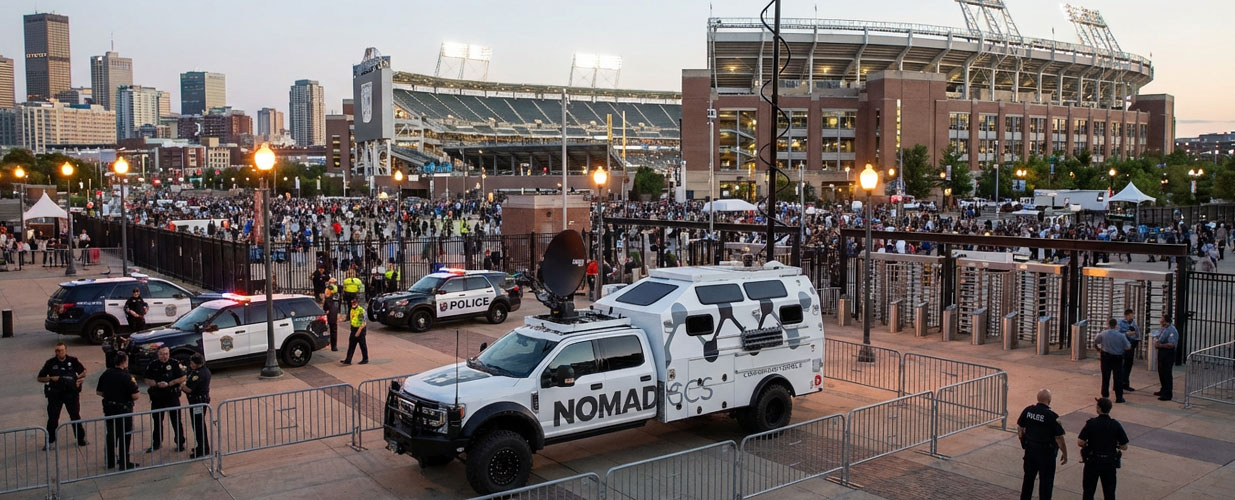
Large, planned events such as the FIFA World Cup, the Olympic Games, and other major gatherings bring together enormous crowds, diverse agencies, and complex operational requirements. Host cities must orchestrate security, transportation, emergency services, and public communication across venues that may span hundreds of square miles. In these environments, traditional fixed command posts struggle to keep pace with rapidly changing conditions on the ground.
Mobile command and control (C2) assets have emerged as essential tools for ensuring resilience, adaptability, and uninterrupted coordination throughout these events. They enable agencies to operate at the tactical edge, maintain situational awareness, and respond decisively in dynamic, high-density environments. Their role becomes even more critical as unmanned aircraft systems (UAS) and counter-UAS (C-UAS) technologies move into the mainstream of event operations.
An Operational Reality for Major Events
Modern large events are more complex than ever. They involve extended timelines, multi-site venue footprints, and heightened expectations for public safety and service continuity. Agencies must integrate intelligence analysis, communications pathways, and sensor data in real time while coordinating multiple mission partners. Local law enforcement, federal security teams, private organizations, and international delegations each bring distinct requirements.
This has established a new operational reality, the need for mobility. A mobile C2 capability provides the flexibility to deploy where the mission requires, rather than relying solely on fixed infrastructure. Mobile assets can reposition based on crowd behavior, venue schedules, weather impacts, or emerging threats. This agility supports both proactive planning and rapid incident response.
Enhancing Coordination in Complex Environments
At major events, effective incident management depends on shared understanding. Multiple agencies arrive with different communications systems, operating procedures, and areas of responsibility. Fixed command centers remain critical for strategic oversight, but they do not always provide the proximity or responsiveness required for field-level operations.
Mobile C2 assets fill this gap. They serve as forward command nodes that deliver:
-
Real-time situational awareness
-
Interoperable communications across agencies
-
Redundant capabilities when infrastructure is overloaded
-
On-site decision support during time-sensitive incidents
In crowded urban environments, proximity matters. A mobile C2 platform brings operational leaders closer to the scene while maintaining access to mission data, sensor feeds, and coordination tools.
The Expanding Role of Air-Domain Operations
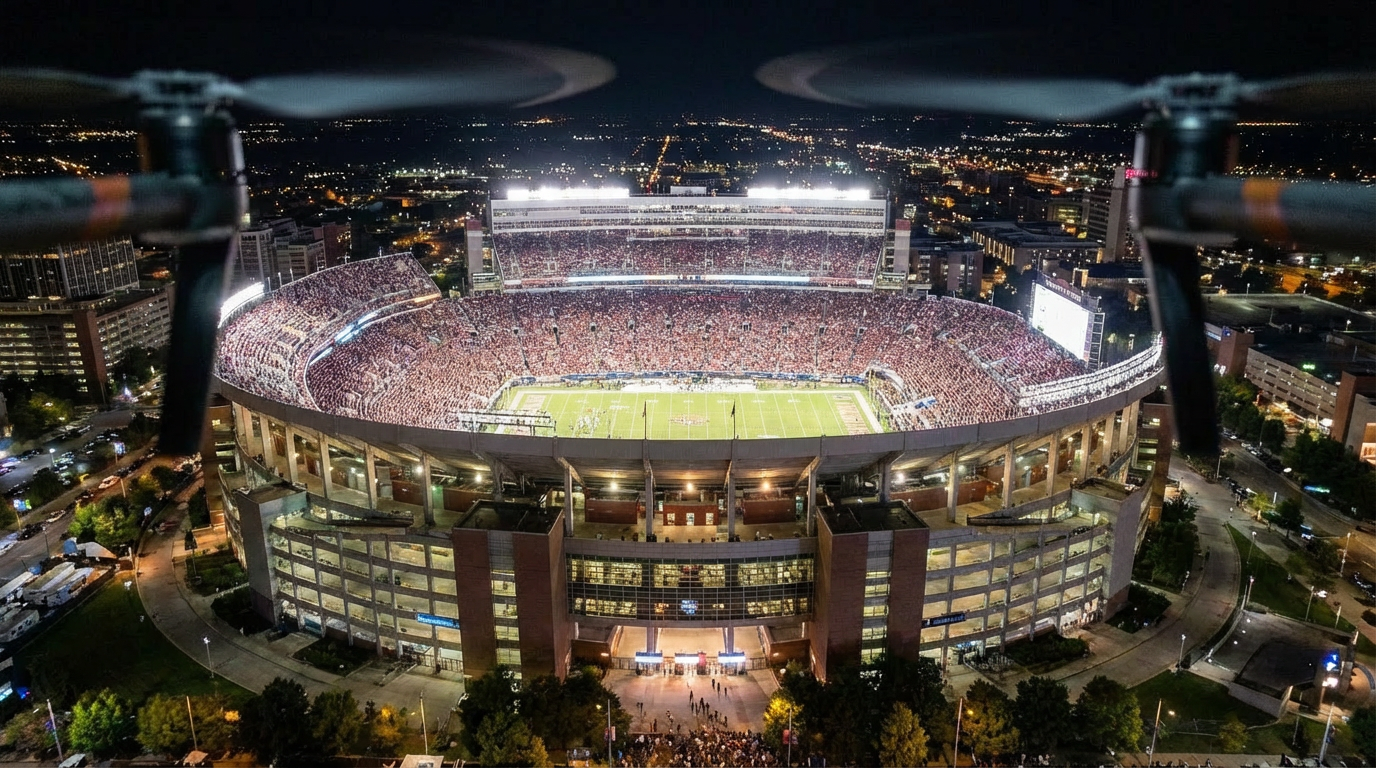
UAS operations are now a routine component of security and operations at large events. They provide wide-area visibility, traffic and crowd-flow assessment, thermal imagery, and rapid intelligence for field teams. Managing drone operations at scale, however, requires infrastructure that can move with the mission.
Mobile UAS Ground Control Stations (GCS) extend the reach and reliability of drone operations by positioning control nodes near areas of interest. This supports stronger command links, extended flight endurance, dynamic repositioning, and redundant control options during high-tempo or congested periods. Mobile ground control delivers the advantages of tactical UAS oversight while integrating aerial intelligence into the broader C2 picture.
A mobile GCS also enables joint operations among agencies operating different aircraft or systems. By hosting shared tools and communications pathways, mobile control elements reinforce safety, standardization, and mission coherence.
Addressing the Rising Need for Mobile Counter-UAS
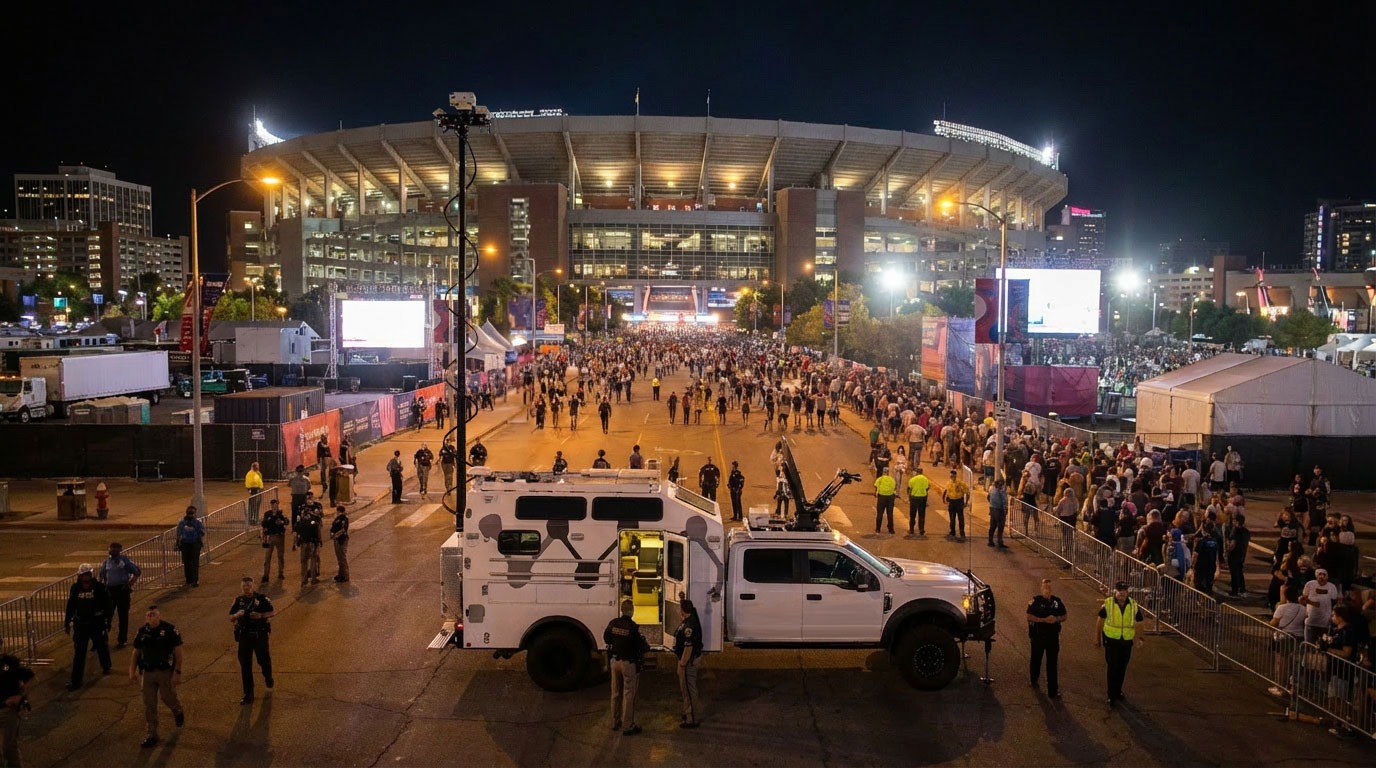
As legitimate UAS operations expand, unauthorized or malicious drone activity has increased as well. Recent large events have experienced incursions ranging from nuisance flights to genuine security risks. Static C-UAS deployments provide coverage, but they can be constrained by fixed infrastructure, blocked sightlines, or the simple reality that threats move.
Mobile C-UAS capabilities allow operators to respond with flexibility. They can be deployed to temporary fan zones, outdoor festivals, high-value venues, and VIP transit routes, or repositioned quickly based on evolving intelligence. By combining detection, tracking, identification, and mitigation capabilities in a mobile platform, security teams are better equipped to protect the air domain.
When integrated into the event’s broader C2 architecture, mobile C-UAS units maintain airspace situational awareness while supporting authorized drone operations.
Mobility as a Force Multiplier
Major events demand agility, resilience, and real-time coordination. Mobile command and control assets deliver these advantages by bringing capabilities directly to the point of need. When paired with mobile UAS GCS and mobile C-UAS, they enable a multidomain operational posture that is responsive, synchronized, and mission-ready.
These systems are not incremental upgrades to traditional infrastructure. They represent a strategic approach to managing the complexity of modern large events. As expectations for safety and operational continuity continue to rise, mobile C2 solutions will remain central to effective planning and execution.
Note: Images shown on this page are illustrative and AI-generated.